Friday, November 6, 2009

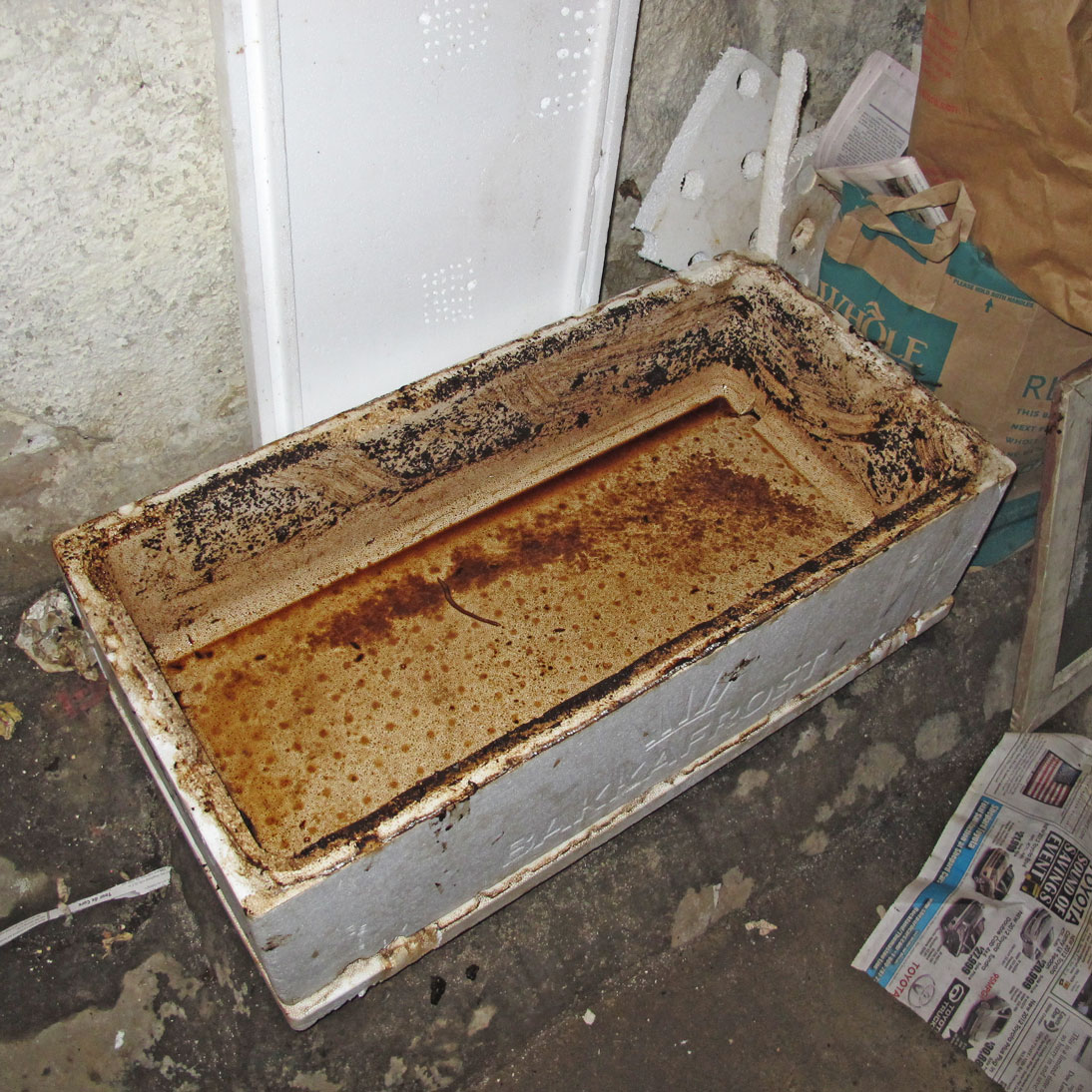
What is the best size for my worm bin?

Really that is determined by what works for you in the space you have.

You can buy manufactured bins online or in progressive stores, but I suggest you save your money and make one yourself!

When I respond to this question, I offer the following suggestions and considerations:

Red wigglers don’t typically dig more than 8” deep into a worm bin, so a really deep bin does not work as well as a shallower bin. You want to have the worms all the way to the bottom of the bin to keep conditions aerobic.

Really large bins (30 or 50 gallon size) can be used for worm bins, but they are VERY heavy when full of worms and vermicompost. If you’re planning to move your bin (e.g., take it outside to harvest using the sun), consider a series of smaller bins. If you're not going to move it, these large bins can certainly work.

Small bins can also work. Some people have shoebox size bins they keep under the kitchen sink. This can work, however, you must closely monitor conditions in your bin and be careful what you feed them. In a small bin the worms have nowhere to escape if the conditions become unhealthy. A friend had a wonderful bin until a bunch of limes were added in a layer to the bin after a Cinco de Mayo party. Soil pH dropped and all the worms died. This is also why I recommend you feed in the corners when you are starting.

I find the standard 18 gallon plastic storage totes work well for me. They are reasonably sized to allow the worms to flee from any bad things you may add, they are not too when full, they don’t take up too much space in the room, and they can be stacked. See http://www.wormmainea.com/Worm_Bin_Instructions.pdf for free instructions for building a WormMainea style worm bin).

The size and style of your worm bin is not important. If it works for you then it is best. The most important thing is that you get started with a worm bin.

Cheers,

Mark

Friday, October 30, 2009

Overwintering Red Wigglers Outside (?)

Without fail I get questions this time of year about keeping worms outside: Can I (How can I) keep my worm bin outside over winter? What about the garage/shed? etc.

I do not take my worm bins outside except to harvest, but here are some tips and tricks reported by others and my own observations about keeping red wigglers outside in cold weather.

First, the facts. You cannot vermicompost in freezing conditions. Red wigglers will die if the soil they are in freezes. I know they can become dormant and cocoons can survive, but in general most will die and your vermicomposting will cease when the pile freezes. In reality, when your soil temp drops down to 40F and below, your composting is so slow as to be stopped. Just like your fridge, things below 40F decompose very slowly.

In my 10 years of vermicomposting I have had worms survive outdoors only one year. It was in my outdoor composter (Earth Machine http://t1.gstatic.com/images?q=tbn:MI_dfU_Gk4cwsM:http://ecx.images-amazon.com/images/I/51HGE6GMJQL._SL500_AA280_.jpg ). It was 3-4 years ago. We had a relatively warm winter with no long cold spells and little snow cover. I went outside in early March and I took the lid off and discovered 3 red wigglers hanging out in the warm condensation on the lid. First and last time ever. I can only guess they were dormant and found a spot they could survive (not a deep freeze year and sun warmed the container just enough?). Typically, the Earth Machine is a compost popsicle. I wait until early April for the soil temp in the outdoor composters hit 50F, then I bring a bunch of red wigglers out to get them going. I am really bad about mixing the outdoor compost piles, so I sacrifice some red wigglers to do the work for me.

So if your bins are outside, you have 3 options: 1) bring your bin indoors, 2) start over with new worms in an indoor bin, 3) insulate and heat your bin to keep it from freezing.

I cannot use option 1 because of Bert's rules ("No bad smells and not bugs in the house"). Outdoor bins typically have insects, so that rules that out for me. If you (and your family) are OK with that possibility, then option 1 may be for you. These two options are pretty simple.

The more difficult proposition is option 3: keeping the bin outdoors and keeping it from freezing (and ideally between 60-70F).

You could with a big enough pile continue to add a hot manure to keep the soil warm enough. The key would be hot but not too hot (a pile rather than an impermeable enclosure like a bin or tub). I know my brother's horse manure windrow in Northeast PA works year round. They add to it frequently and it can be found steaming with active red wigglers year round. Reportedly, chicken or pig manure will also work.

Others have reported heating/seed starting mats under plastic wading pools in the shed with a styrofoam cover work. This would keep the soil temp relatively constant.

Another person proposed digging a pit below the frost line and insulating the sides and top with closed cell foam insulation and a trap door lid. Then piling hay bales over the door. I don’t know whether this was successful, but my frost line here is fairly deep and it wouldn’t be practical. Also, this would not make sense to me because one of the reasons I started vermicomposting was to NOT go outside to compost in the cold weather.

If you have experience with any of these, please leave a comment.

As for me, I will continue to compost indoors in my basement.

Cheers,

Mark

Friday, October 23, 2009

Leaf Blowers are Evil!


There are few things I hate more than a leaf blower. They are loud, smelly, and potentially dangerous to your health.

In my mind, raking leaves in the fall is an enjoyable, peaceful event that marks the end of summer. The sound of the leaves and the rake moving over the ground, the crunch of the leaves when a child jumps into the pile, the smell of crispy fall air.


Using a leaf blower may be faster, but is it worth it?


All these are lost when you are holding a leaf blower. The electric ones pollute far less than the gasoline powered models (which can be 80 times more polluting than an automobile! http://www.epa.gov/ttn/chief/conference/ei15/session5/fitz.pdf).

Leaf blowers stir up settled dust, mold, and allergens settled on the soil, making these airborne can cause problems for people with asthma and allergies.

Also, leaf raking is great exercise for you.


Thursday, October 8, 2009

Worm compost tea vs. worm bin drainage

If you're reading my blog, then you probably know that worm compost tea is great for your plants. I want to make a distinction though: worm compost tea vs. worm bin drainage.

In my mind, worm compost tea is distinctly different from the liquid that drains from some bin designs (what I call worm bin drainage).

Worm compost tea is made by separating the vermicompost from the worms and steeping the worm compost in water to make a tea. My website has complete instructions for brewing up your own worm tea: 1# of vermicompost in a 5 gallon bucket of water.

I don't mean to say that the drainage from a worm bin would be bad for plants. From what I have read it is great fertilizer; however, I'd be concerned about putting it on edible veggies because you do not know what is in it. I have also found a variety of different reports on how to use it ranging from straight (undiluted) to diluted to the color of straw. If I were to use this on salad and other greens I probably diluting it to straw color and bubbling air through it for 12-24 hours using an aquarium bubbler.

If anyone has experience using worm bin drainage, I'd love to hear how you prepare it for use.

Cheers,

Mark

Saturday, October 3, 2009

Meeting fellow vermicomposters-- Anyone can vermicompost

I thoroughly enjoy meeting other vermicomposters (new and old). While I do mail worms, I prefer to meet people who are buying from me. This saves them money and allows me to spend a few minutes educating so they get off to a good start.

When I started WormMainea, I assumed those who visiting my site and contacting me would be a narrow portion of the population, Essentially, people a lot like me: frugal, eco-minded people looking to experiment with a different way of composting that allows you to compost inside in the winter.

Well I got it completely wrong! I meet all sorts of interesting people ranging from back-to-earth retiring hippies who want to vermicompost again to apartment-dwelling professionals who want to reduce their waste, from former Everest climbers to college students, from monks to manufacturers of skate-chic clothes, and everything in between, including some frugal, eco-minded composters like me.

I am continually amazed by how many people are interested in vermicomposting and the cross section of the population that contacts me. I enjoy talking with them about how they found me and how they became interested in vermicomposting.

Cheers,

Mark

Monday, September 28, 2009

The joys of teaching vermicomposting

I really enjoy teaching vermicomposting to school children. Their excitement is wonderful, and some of the questions catch me by surprise.

Another observation by teachers has also caught me by surprise: several teachers, especially younger grades, have reported back that after my vermicomposting demonstration and the arrival of the worm bin there has been a change in the snack diet of the classroom .

Children want to participate in feeding the worms. However, only some food can be placed in the worm bin (e.g., remnants of fruits and vegetables and NOT processed sugary or salty foods), so children who want to feed the worms must bring in fruits and veggies.

Who would have thought vermicomposting would make children eat better?!

Cheers,

Mark

Tuesday, June 2, 2009

Big savings from a small investment can reduce your carbon footprint!


A Save is average savings since the unit was installed.


This shows how many burner hours were used for the data.


I save is instant savings (last time the burner ran).

As part of our home inspection for solar upgrades, we had our heating system evaluated. The engineer suggested a $400 upgrade to make our boiler more efficient. The unit promises at least 10% improvement on efficiency of you get your money back. It is a bolt-on installation that can be retrofit to most boilers. Essentially it makes the boiler smarter. It bolts on the side of the bioler and there are some sensors that strap on your return water pipes. It is not a major installation.

The unit is from Intellicon (we have hot water so we installed the HW unit). Cost of the unit plus installation was $400. When we purchased it in Summer 2008, oil proce was $2.89/gallon. I calculated our payback at a little less than 2 years, given a 10% savings on our typical 750 gallons per year consumption.


The unit saves energy by adjusting the burner run pattern according to the temperature of the returning water. We tried it and have been very pleased.

When the weather is really cold (and the return water is much cooler because the home is being heated, the unit does not reduce run time very much), the the unit saves less than during the spring and fall.

The unit shows instant and average savings. Our average savings (as shown in the photo) is more then 20%. We felt no difference in our home temperature. You wouldn't even know you have it installed. Though I confess that I like to go down and see how much I'm saving!

For more information, see http://www.intellidynellc.com/02_pgHW.htm

This year (heating season June 1 to May 31) we used 77% of the oil we used last year, a savings of 155 gallons. At $2.10/gallon, we saved $325.50! I anticipate we will easily meet our goal of a 2 year payback time.

Another option is to install an outdoor reset control (where the sensor measures outdoor temperature), but we elected go with this option.

I encourage you to try one of these to make your heater smarter!!

Cheers,

Mark